
The Concentration Camps of the Armenian Genocide, a 520-page volume co-edited by Bedross Der Matossian, will be published on Oct. 29 by Bloomsbury Publishing.
Although scholarship on the Armenian Genocide has expanded significantly in recent decades, the concentration-camp system established by the Ottoman authorities, particularly in present-day Syria, remains insufficiently studied. This is the first volume to offer an in-depth and multifaceted examination of these camps. Its chapters trace the origins and development of the camp system and document the atrocities committed at sites such as Deir ez-Zor, Ras al-Ain, Meskene, and elsewhere.
Der Matossian is the Elwood N. and Katherine Thompson Distinguished Professor of Modern World History at the University of Nebraska–Lincoln. A Guggenheim Fellow, he is the author, editor, and co-editor of nine books, including Shattered Truths: Denial of Genocides in the Digital Age, forthcoming from the University of Nebraska Press in late fall 2026. He also serves as Director of Genocide Research at the Zoryan Institute.
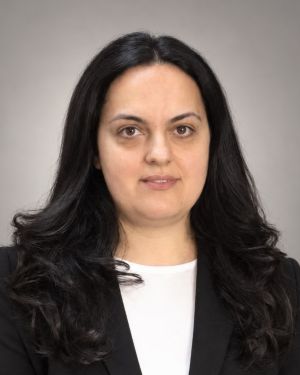
Co-editor Edita Gzoyan teaches at the American University of Armenia (AUA). She is a genocide studies scholar specializing in the legal and historical dimensions of the Armenian Genocide.
“This has been one of the most demanding projects we have undertaken,” Der Matossian and Gzoyan commented. “One of the volume’s distinguishing features is that it brings together renowned experts and emerging scholars, including a substantial number of Armenia-based researchers. Over the course of three years, we worked closely with the contributors to ensure the scholarly quality and historical accuracy of each chapter. Repeatedly engaging with accounts of the suffering and violence endured by Armenians in these camps was difficult, but it also reinforced our commitment to documenting this understudied dimension of the genocide."
Featuring twenty-one chapters by historians and social scientists from Armenia, France, Germany, the United States, the United Kingdom, Lebanon, and Australia, the volume brings together diverse disciplinary and geographical perspectives. It also foregrounds survivors’ voices through memoirs and diaries that document their experiences of deportation and life in the camps. Literary reflections and biographical studies of Armenian and foreign individuals connected with the camps and humanitarian missions further enrich the volume’s interdisciplinary approach.
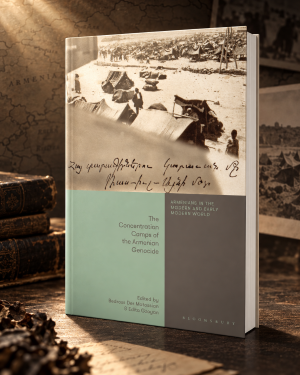
The contributors examine the experiences of deportees along deportation routes and in transit and concentration camps; the geography and spatial organization of the camps; the brutal realities of daily life; the distribution of humanitarian assistance and the development of self-help mechanisms; interactions between deportees and local populations; moral and physical forms of resistance; and the experiences of children. The volume also considers Ottoman laws, decrees, and administrative practices relating to the camps and situates the Armenian case within the broader comparative history of concentration camps and genocide.
“We consider this one of the most important books published in the field of Armenian Genocide in the past few years," the co-editors added. "We hope that it will make a significant contribution to Armenian Genocide scholarship and encourage further research on the concentration-camp system and what is often described as the second phase of the genocide."
The book is part of the series Armenians in the Modern and Early Modern World, edited by Der Matossian. This project was generously supported by the Friedman Fund, the Hymen Rosenberg Professorship, and the Department of History at the University of Nebraska–Lincoln.
The department is part of the College of Arts and Sciences.


